

Am I Expecting?
Understanding the first subtle signs
It’s that very special feeling in your tummy, a gentle mix of anticipation, a hint of nervousness and a thousand quiet questions. Was that a tiny twinge just now? Why am I feeling so incredibly tired today? Very early on, often from the 5th or 6th week of pregnancy, your body begins to send soft, almost secret signals that something new is unfolding.
The first signs: typical symptoms of early pregnancy
Every woman and every pregnancy is beautifully unique. Whilst one mum may ‘feel’ that something has changed shortly after conception, another may only realise when her period does not arrive. Both experiences are completely normal. Here are some of the most common signs:
- Breast tenderness: Often one of the very first clues. Your breasts may feel more sensitive or firmer, similar to before your period, but often more noticeable.
- Fatigue: Your body is quietly working hard, creating a safe and nurturing space for your baby. The hormone progesterone can leave you feeling deeply tired, as if your body is gently asking you to slow down.
- A slight tugging sensation in your lower abdomen: This can feel similar to period cramps. It is your body making space, as the ligaments of the womb begin to stretch ever so gently.
- Changes to your sense of smell: Familiar scents may suddenly feel overwhelming or unpleasant. Even everyday smells can seem stronger. Your body is instinctively looking after you.
- Classic morning sickness: This may come in the morning, but it can also appear at any time of day, often when you least expect it.
It is very important to know: some women do not notice any signs at all. They feel well, have no nausea and no tugging sensation in their tummy. Every hormonal system responds in its own way, and some bodies move through this change quietly and gently.
The right time to take a pregnancy test
We know how long the waiting can feel. Even so, patience truly matters here. A pregnancy test measures the hormone hCG in your urine.
An ovulation test shows which days you are fertile. Some people use it to try to read early signs, but it cannot confirm a pregnancy.
A pregnancy test, on the other hand, can give you a relatively reliable result from the day your period is due.
💙 Our tip: Try to take the test using your first morning urine, when the hormone concentration is at its highest.
A glimpse into the future: the position of the placenta
The position of the placenta is often talked about when it comes to pregnancy, but it does not play a role in these early signs. It helps to understand the difference:
- Anterior versus posterior placenta: Whether the placenta sits at the front or the back of the womb has no effect on early symptoms such as nausea or breast tenderness.
- Feeling the kicks: It is only later, around weeks 18 to 22, that its position becomes noticeable. If the placenta lies at the front, it can soften your baby’s first movements, like a gentle cushion. You may feel them a little later or more softly than mums with a posterior placenta.
Frequently asked questions about the early stages
Could I be pregnant despite a negative test?
Yes, this can happen if the test was taken too early. The hCG hormone rises quickly in the early days, often doubling every two days. If your test is negative but your period has not arrived, give your body a little more time and test again after two to three days.
What is ‘implantation bleeding’?
Around 6 to 12 days after fertilisation, the fertilised egg settles into the womb. In doing so, it may cause slight spotting, usually very light and pale red or brownish. It is much lighter than a period and is generally nothing to worry about.
When should I see my gynaecologist?
If your test is positive, it is usually enough to book an appointment in the 7th or 8th week. By then, you may already be able to see a tiny, flickering heartbeat on the ultrasound screen.
Do the symptoms change with every pregnancy?
Yes. Every pregnancy tells its own story. Just because you felt unwell the first time does not mean you will feel the same again. Your body will find its own way, and you can trust it to guide you.
What helps with the extreme tiredness at the start?
Try to listen closely to your body. If it asks for rest, allow yourself those quiet moments. Fresh air and a good intake of iron can also support you. For many women, this deep tiredness begins to ease after the first three months.
Related products
-
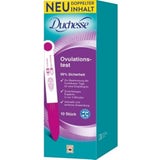
Duchesse Ovulation Test, 10 pieces
- 10-piece pack
- Results available in 3 minutes
- 99% reliable
Magazine Articles:
-
Switzerland: Free standard delivery from CHF 69.90
-
Delivery in 3 business days.
Secure payments
with SSL encryption technology