
Baby-Led Weaning (BLW)
Your guide to starting solids without baby food
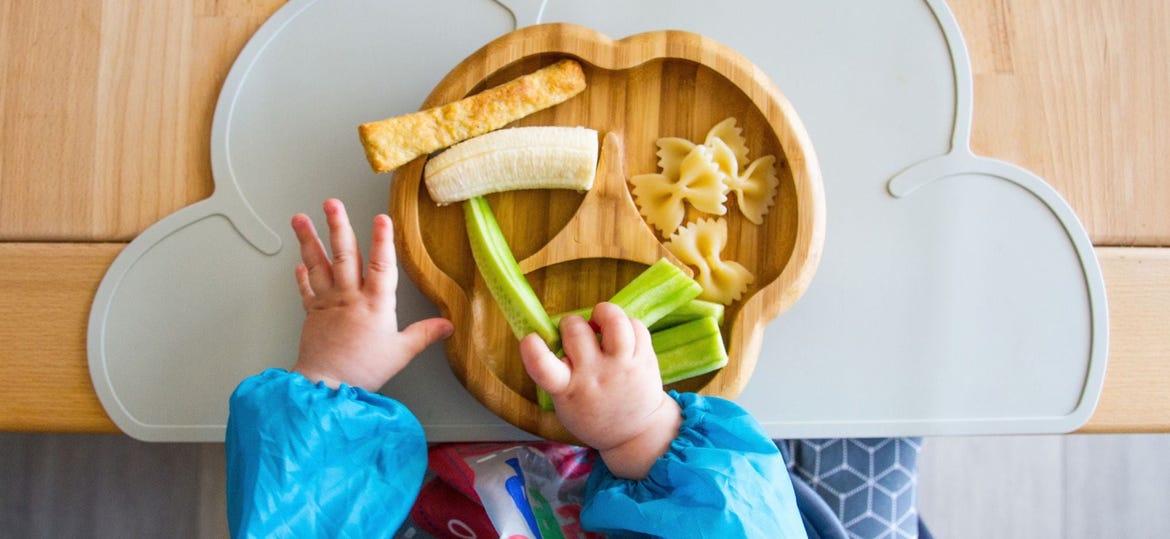
Baby-Led Weaning (BLW) is an approach to introducing solid foods that allows babies to feed themselves from the start. Instead of being spoon-fed finely puréed vegetables, babies are offered soft finger foods that they can pick up and eat independently.
💡 The essentials of BLW
- The concept: No spoon-feeding or games to encourage eating. Your baby decides what to eat, how much to eat and at what pace.
- Signs of readiness: Before starting BLW, your baby must show all the signs of being ready for solid foods, particularly being able to sit upright with good head control and having lost the tongue thrust reflex.
- Safety first: Round, smooth or hard foods, such as whole grapes, raw carrots and whole nuts, must be avoided. All food should be soft enough for your baby to manage safely.
- Food before one is just for fun: Throughout the first year, breast milk or formula remains your baby's main source of nutrition.
How does Baby Led Weaning (BLW) work?
Traditional weaning often brings to mind a parent feeding their baby smooth purée with a small spoon. Baby-led weaning takes a different approach.
With BLW, your baby joins the family at mealtimes and is offered soft, unseasoned foods in easy-to-hold pieces, usually cut into thick sticks. Your baby picks up the food, brings it to their mouth and explores it by sucking, chewing and swallowing. Parents allow their baby to eat independently without pressuring them to eat more. From the beginning, babies learn to recognise when they are full while discovering different foods through their senses.
When is my baby ready for finger foods?
Age alone is only a rough guide, although most babies are ready at around six months. What matters most is whether your baby has developed the physical skills needed to manage solid foods safely. This is particularly important with BLW.
Your baby should show all three of these signs of readiness:
- Sitting upright: Your baby can sit steadily in an upright position, with light support around their lower back if needed. They must not slump forwards, as this could obstruct their airway.
- Hand-to-mouth coordination: Your baby can deliberately reach for objects and bring them to their mouth.
- Loss of the tongue thrust reflex: Your baby no longer automatically pushes solid food out of their mouth with their tongue.
Gagging vs choking
One of the biggest concerns parents have about BLW is the risk of choking. Understanding the difference between gagging and choking is therefore essential.
In babies, the gag reflex is triggered further forward in the mouth than in adults. This natural protective reflex helps prevent food from travelling too far back. If a piece of food moves too far towards the throat, your baby may gag loudly and their face may turn red as they push it forwards again. Although this can look alarming, gagging is a normal part of learning to manage solid foods.
Choking, on the other hand, occurs when food blocks the airway. A baby who is choking may be unable to cough, cry or make a sound and may turn blue. Important: Research suggests that BLW does not increase the risk of choking compared with traditional spoon feeding, provided food is prepared and served safely.
🛍️ Essentials for getting started with BLW
BLW is all about exploring food through the senses, so things can get rather messy. To help make mealtimes more relaxed and enjoyable, you'll find plenty of practical essentials in our shop:
- Bibs are essential for BLW. They catch food that misses your baby's mouth and help keep their clothes clean.
- Children's tableware: We recommend non-slip silicone plates with suction bases to help keep plates securely on the table rather than ending up on the kitchen floor.
- Practical washcloths and gentle wipes are ideal for cleaning little sticky fingers after meals.
Which foods are suitable for starting BLW?
When starting BLW, food should be cut into pieces that your baby can easily grasp with their whole hand. Thick chip-shaped pieces are ideal. All foods should also be very soft.
Vegetables (steamed until soft): Sweet potato sticks, carrots, parsnips, broccoli florets or pumpkin.
Fruit (soft and ripe): Avocado, ripe banana, soft mango or steamed apple slices.
Adding oil: Drizzle a few drops of high-quality baby oil rich in omega-3 over steamed vegetables to help your baby absorb fat-soluble vitamins.
Can you combine purées and finger foods?
Absolutely. Many parents assume they have to choose between traditional spoon feeding and BLW, but the two approaches can easily be combined.
A combination of purées and finger foods can be a more relaxed option for many families. For example, you could offer your baby steamed vegetable sticks to hold at lunchtime and some milk and cereal porridge in the evening, or when they are particularly tired. The most important principle remains the same: never force your baby to eat or push a spoon into their mouth if they turn their head away.
Frequently asked questions about Baby Led Weaning
Does my baby need teeth to start BLW?
Not at all. Babies have surprisingly strong gums and can easily mash soft cooked vegetables, ripe fruit and even pasta without teeth. Having teeth is not necessary to start BLW.
My baby hardly eats anything and just squashes the food. Is that normal?
Yes, this is completely normal. In the beginning, BLW is more about exploring food than eating large quantities. Your baby is discovering how different foods feel and behave. What does a piece of pasta feel like? What happens when they squeeze a piece of avocado? Throughout the first year, breast milk or formula continues to provide most of the nutrition your baby needs.
Which foods should be avoided with BLW?
Certain foods should be avoided during your baby's first year. These include honey, which carries a risk of infant botulism, and small, round foods that could cause choking, such as whole grapes, blueberries and cherry tomatoes. These should always be quartered lengthways. Whole nuts and hard pieces of raw vegetables or fruit, such as carrots and apples, should also be avoided, along with added salt and sugar.
Related products
-

Nattou Mealtime Bib Green
- Soft, high-quality silicone
- Gentle on sensitive baby skin
- Waterproof bowl (180 ml)
-

Nattou Mealtime 4-Piece Weaning Set White/Light Taupe
- Dimensions: 19.2 × 19.2 × 8.5 cm
- Dishwasher-safe
- Raised rim
-
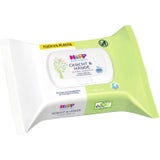
HiPP Baby Soft Face & Hands Cleansing Wipes, 20 pieces
- For sensitive skin
- Ideal for on-the-go use
- Perfume-free & pH-neutral
-

pandoo Children's Tableware Set
- 1 x Bamboo Plate
- 1 x Bamboo Bowl
- 2 x Bamboo Spoons
Magazine Articles:
-
Switzerland: Free standard delivery from CHF 69.90
-
Delivery in 3 business days.
Secure payments
with SSL encryption technology