
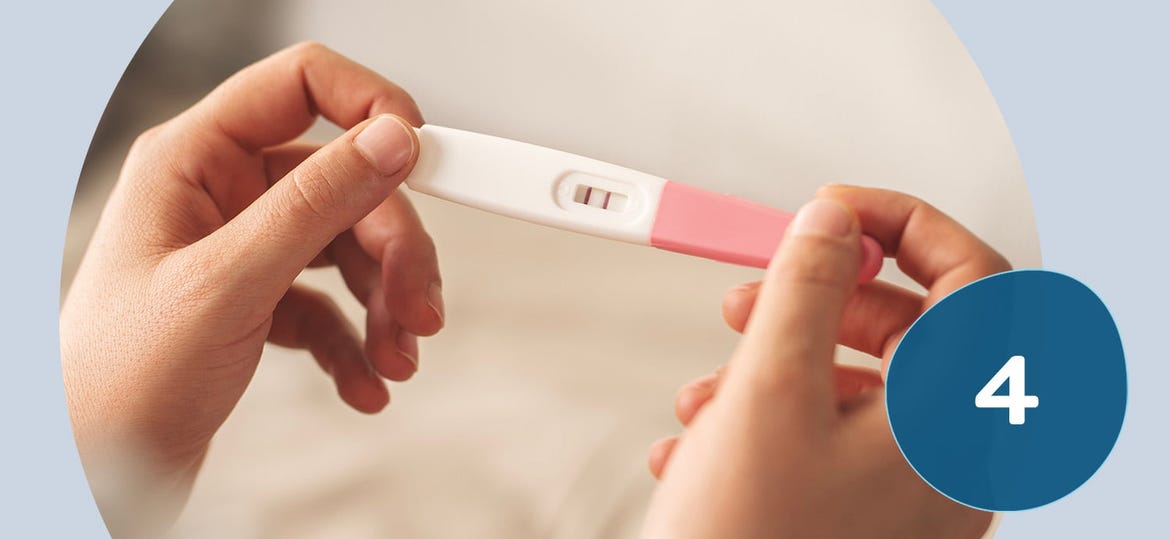
4th Week of Pregnancy
Fertilisation was a success
Your baby’s development: from a tiny salt crystal to an embryo
By the 4th week of pregnancy, the fertilised egg, now called a blastocyst, has firmly implanted itself in the lining of the womb. This is an important milestone. This tiny cluster of cells is developing into two parts: one will become your baby, known as the embryo, while the other will form the placenta, which will nourish your child over the coming months.
Although your baby is currently only about the size of a grain of salt (approximately 0.5 mm), it is already dividing into three germ layers. These will later develop into the organs, the nervous system and the skin. It is a rapid start to life.
Hormones and the first signs of pregnancy
Your body has now received the signal that you are pregnant. The hormone progesterone, produced by the corpus luteum, ensures that the lining of the womb is maintained rather than shed, which is why your period has stopped. At the same time, your body begins producing the pregnancy hormone HCG (human chorionic gonadotrophin).
You may already be noticing the first signs, which can feel similar to premenstrual syndrome (PMS):
- Tender breasts: Your mammary glands are already preparing for their future role.
- Tiredness: Your metabolism is working at full speed, which may leave you feeling unusually exhausted.
- Implantation bleeding: Very light, pale red spotting is normal at this stage and is usually nothing to worry about.
- Sensitivity: Smells may seem more intense, and your mood may fluctuate due to hormonal changes.
Tips for your wellbeing
The first positive test often marks the beginning of a nesting phase. Your body is now supporting new life. Try to reduce stress and surround yourself with things that help you feel safe and comfortable. Whether it is gentle care for your body or creating a cosy environment at home, anything that brings you a sense of calm can also benefit your baby.
Your guide to the 4th week of pregnancy
When is a pregnancy test in the 4th week of pregnancy reliable?
A standard pregnancy test from a pharmacy or chemist measures the HCG level in your urine. By the 4th week of pregnancy, ideally from the day your period is due, this level is usually high enough to provide a reliable result of over 98 per cent. It is best to use your first morning urine, as hormone concentration is highest at that time. If the test is negative but your period has not started, wait two days and test again, as ovulation may have occurred later than expected. Allow your body the time it needs.
What does a pulling sensation in the lower abdomen mean in the 4th week of pregnancy?
Many women experience a pulling sensation during this week that feels similar to the onset of a period. This is often a sign that the womb is adjusting and that the round ligaments are beginning to stretch gently. Your body is preparing space for your baby’s growth over the coming months. As long as this sensation is not accompanied by severe pain or heavy bleeding, it is usually not a cause for concern. A warm, but not hot, water bottle or a relaxing bath may provide relief.
What is the role of nutrition and folic acid at this stage?
The 4th week of pregnancy is a critical phase for organ development, so a strong nutritional foundation is important. Folic acid is particularly essential, as it supports the development of the neural tube, from which the brain and spinal cord form. In addition to a high-quality supplement, green vegetables such as spinach and broccoli can help meet your needs. It is also advisable to avoid raw foods such as sushi, unpasteurised cheese and undercooked meat to reduce the risk of infection. At this stage, your baby receives nutrients through your bloodstream, so fresh and natural foods are the best choice.
What can be seen at the first ultrasound scan in the 4th week of pregnancy?
If you have an appointment with your gynaecologist during this week, it is normal not to see a visible embryo yet. In many cases, only a thickened uterine lining or a small gestational sac, which may appear as a dark shadow, can be detected. Your baby’s heartbeat will not begin until the following weeks, which is why many doctors recommend waiting until the 7th or 8th week for an ultrasound scan. At this stage, it is enough to know that the process has begun, even if it is not yet visible.
Why do I feel extremely tired?
This pronounced tiredness is a common symptom of early pregnancy and is largely due to the hormone progesterone. Your body is undergoing significant changes, including the development of a new circulatory system for the placenta and adjustments to your metabolism. It is natural to need more rest during this time. Allow yourself to take breaks without feeling concerned, as your body is responding to its needs. Energy levels often improve during the second trimester.
Related products
-

Weleda Stretch Mark Body Butter, 150 ml
- For normal skin types
- Prevents the formation of stretch marks
- Subtle floral scent
-
FutuNatura Folic Acid, 30 capsules
- Vitamin B2, B6 & B12 proportions
- Gelatin capsule
- For daily consumption
-

ATTITUDE Super Leaves Nourishing Lotion, 473 ml
- Ideal for demanding skin
- Promotes elasticity
- Rich in antioxidants
-

get your wellbeing by BIOGENA Mum Multi Edition, 60 capsules
- With activated folic acid & bioavailable iron
- Vegan
- Activated micronutrients for best bioavailability
Magazine Articles:
Discover Babymondino:
-
Switzerland: Free standard delivery from CHF 69.90
-
Delivery in 3 business days.
Secure payments
with SSL encryption technology